


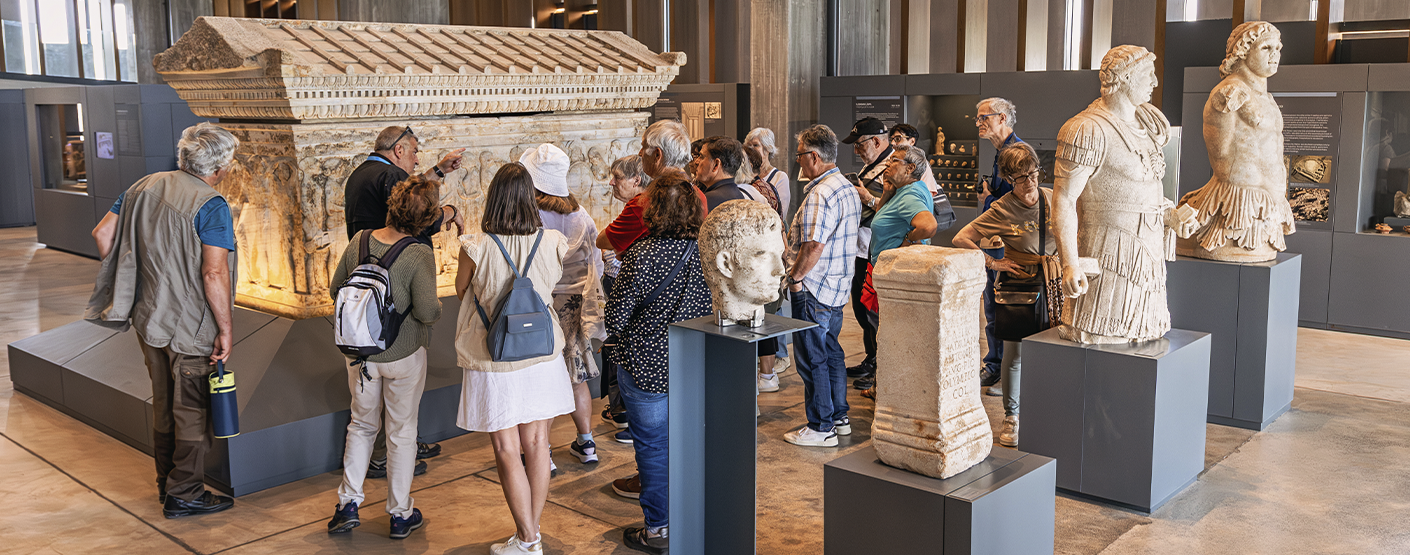
Improving visitor flow in museums and galleries with smart video analytics
Museums and galleries are experiencing steady growth in visitor numbers worldwide, increasing both opportunity and operational complexity. At the same time, research shows that overcrowding and long waiting times are among the leading factors negatively affecting visitor satisfaction in cultural spaces (Factors Influencing Perceived Crowding of Tourists and Sustainable Tourism Destination Management).
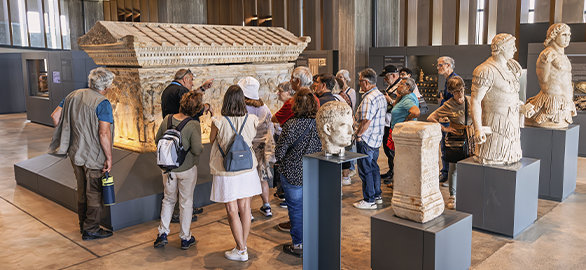
As visitor density increases, managing how people move through exhibition spaces becomes just as important as the exhibits themselves. When crowding forms in key areas, it can reduce comfort, limit engagement, and in some cases create safety risks. Traditional monitoring methods often struggle to respond in real time, leaving staff to react only after congestion has already occurred.
AI-powered video analytics introduces a different approach by turning existing surveillance infrastructure into a real-time understanding of visitor flow. Instead of only recording activity, systems can now interpret movement patterns, density levels, and spatial behavior across the entire venue.
Why visitor flow management is becoming more complex
Modern cultural institutions are no longer static exhibition spaces. They function as dynamic environments hosting temporary exhibitions, guided tours, educational programs, and large seasonal events. Each of these introduces fluctuations in visitor volume and movement patterns.
Even well-designed buildings can experience bottlenecks when visitor distribution becomes uneven. Popular exhibits attract concentrated groups, while transitional spaces such as corridors or entrances can quickly become overloaded during peak hours.
Without real-time insight, operational teams often rely on manual observation or delayed reports from staff. This makes it difficult to intervene early enough to prevent congestion from forming.
How AI video analytics improves visitor flow
AI-based video analytics allows museums and galleries to continuously analyze how visitors interact with space. Cameras act as distributed sensors that measure crowd density, track movement direction, and identify how long visitors stay in specific zones.
This enables a more responsive approach to space management. When congestion begins to form, staff can adjust visitor routing, temporarily restrict entry to certain areas, or open alternative pathways. Over time, aggregated data also helps institutions understand long-term behavioral patterns, such as peak visiting hours or consistently underused exhibition zones.
The result is not only improved flow during daily operations but also better planning for exhibitions, layouts, and event scheduling.
TRASSIR solutions for visitor flow optimization
TRASSIR provides a unified platform for intelligent video analytics in museums and galleries, combining crowd monitoring, people counting, perimeter protection, and behavioral analysis within a single ecosystem.
In real-world deployments, these capabilities are already applied in complex cultural environments wh ere visitor movement patterns vary significantly depending on exhibitions, events, and immersive installations.
For example, at Panorama 1453 History Museum, TRASSIR video analytics is used to monitor visitor flow and provide real-time counting and direction tracking across exhibition areas. This helps the museum manage high visitor volumes while maintaining safe and efficient movement through the panoramic exhibition space.
At the Dijital Deneyim Müzesi, TRASSIR supports analysis of visitor distribution across immersive digital rooms and detects crowd buildup in interactive zones. The system enhances both operational planning and security by providing continuous visibility into how visitors move through experience-driven environments.
Across these deployments, AI-powered analytics enables institutions to transform surveillance systems into operational tools for understanding and managing visitor behavior in real time.
From observation to operational control
The key shift introduced by AI video analytics is effective space management. Instead of reviewing footage after congestion or incidents occur, operators can respond while conditions are still evolving.
This enables cultural institutions to maintain a balance between accessibility and control. Visitors continue to experience open and engaging environments, while operators maintain visibility over crowd behavior and can intervene when needed.
By transforming video surveillance into an intelligent flow management tool, cultural institutions can ensure that every visitor’s journey remains smooth, safe, and engaging — even during peak demand.
What's New?
All News
Centralized security across multi-branch financial institutions
Centralized security across multi-branch financial institutions

DuoStation Gen4 in real operations — centralized control across multiple locations
DuoStation Gen4 in real operations — centralized control across multiple locations

Leading jewellery retailer enhances security and analytics with TRASSIR
Leading jewellery retailer enhances security and analytics with TRASSIR
Fire prevention in crowded public spaces
Fire prevention in crowded public spaces

Premium retail store in Mumbai enhances customer insights with TRASSIR analytics
Premium retail store in Mumbai enhances customer insights with TRASSIR analytics

LIVE webinar: From retail challenges to retail intelligence — turning video data into actionable insights
LIVE webinar: From retail challenges to retail intelligence — turning video data into actionable insights

How AI video analytics can improve restaurant customer flow
How AI video analytics can improve restaurant customer flow
DuoStation Gen4 NVRs — scalable performance for modern video surveillance systems
DuoStation Gen4 NVRs — scalable performance for modern video surveillance systems

Centralized surveillance modernization for a premium jewellery retailer
Centralized surveillance modernization for a premium jewellery retailer

Detecting vandalism and property damage with real-time alerts
Detecting vandalism and property damage with real-time alerts

TRASSIR at Securex 2026 with neaMetrics
TRASSIR at Securex 2026 with neaMetrics

Ensuring guest safety in hotel lobbies and common areas
Ensuring guest safety in hotel lobbies and common areas
Monitoring playground and sports areas for children’s safety
Monitoring playground and sports areas for children’s safety
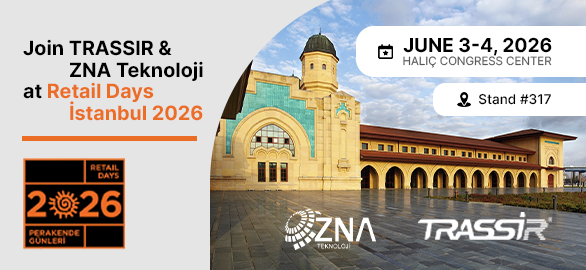
TRASSIR & ZNA Teknoloji at Retail Days İstanbul 2026: Powering the next era of smart retail
TRASSIR & ZNA Teknoloji at Retail Days İstanbul 2026: Powering the next era of smart retail
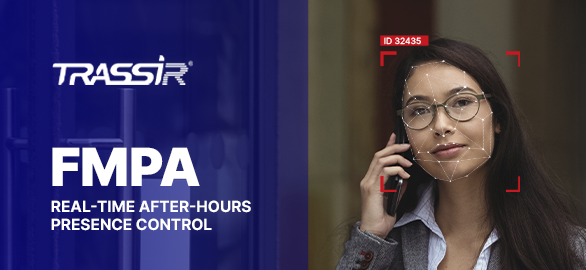
TRASSIR FMPA — secure your facility 24/7
TRASSIR FMPA — secure your facility 24/7
Protecting high-value industrial equipment from theft
Protecting high-value industrial equipment from theft
AI video insights for retail inventory management and loss prevention
AI video insights for retail inventory management and loss prevention
TRASSIR introduces FMPA — Face Match Passage Analysis
TRASSIR introduces FMPA — Face Match Passage Analysis
Improving visitor flow in museums and galleries with smart video analytics
Improving visitor flow in museums and galleries with smart video analytics
Why camera setup matters for license plate recognition — and how to get it right
Why camera setup matters for license plate recognition — and how to get it right