

How AI video analytics can improve restaurant customer flow
Optimizing restaurant performance through visibility, not guesswork
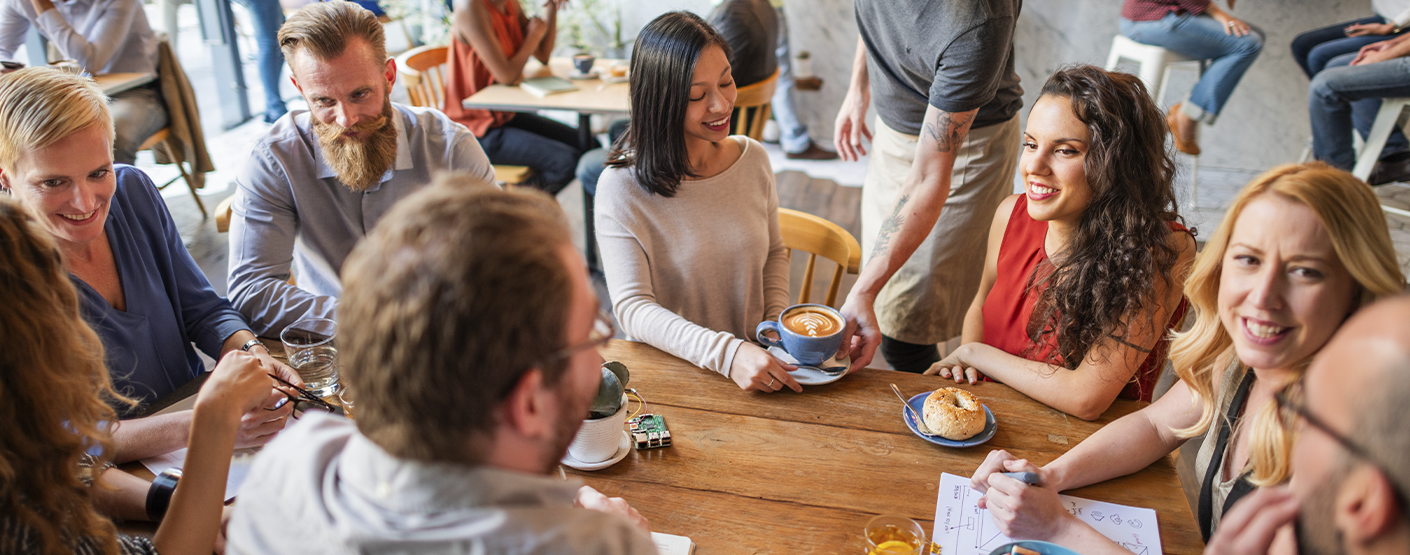
Walk into any busy restaurant during peak hours and you’ll see the same challenge repeating itself in different forms: tables waiting to be cleared, guests standing at the entrance, staff trying to prioritize service without a full picture of what is actually happening on the floor.
The question is no longer whether restaurants are busy. The real question is: how efficiently is that flow being managed?
According to industry research, poorly optimized seating and table turnover can reduce potential daily revenue by up to 20–30%, simply due to delays in seating allocation, cleaning cycles, and lack of visibility into real-time occupancy patterns. At scale, this becomes even more critical. If a table sits idle for just 10–15 extra minutes between guests, how many covers are lost over a full service day? And how often does that happen without anyone noticing?
This is where customer flow tracking changes the equation — turning restaurant management into data-driven control.
Why customer flow is becoming a core operational metric
Restaurants and cafes are no longer competing only on food quality or ambiance. Speed, predictability, and seating efficiency now directly define profitability.
Yet most venues still rely on manual observation or fragmented POS data that tells them what was sold, but not how guests moved through the space to get there.
This creates blind spots:
When did peak congestion actually start building?
Which tables consistently slow down turnover?
Are guests waiting because of kitchen delays or seating inefficiencies?
And perhaps most importantly — where is time being lost in the guest journey?
Without answers to these questions, even well-run restaurants operate partially in the dark. Customer flow analytics addresses this gap by tracking movement patterns, occupancy levels, dwell time, and queue dynamics in real time — turning spatial behavior into operational insight.
The operational impact of visibility on seating and turnover
When seating becomes a data-informed process rather than a manual judgment call, several shifts happen almost immediately. Table allocation becomes faster because staff can see real-time occupancy instead of relying on line-of-sight estimation. Cleaning cycles become more efficient because turnover timing is no longer guessed but measured. Even staffing decisions begin to align with actual traffic flow rather than historical assumptions.
Over time, this leads to a compounding effect: shorter wait times improve guest satisfaction, faster turnover increases revenue per square meter, and more predictable flow reduces staff stress during peak hours. But perhaps the most important shift is subtle — restaurants stop reacting to congestion and start anticipating it. And anticipation, in hospitality, is often the difference between a smooth service and a bottlenecked one.
Integrated TRASSIR AI solutions for customer flow optimization
TRASSIR enables restaurants and cafes to transform customer movement into measurable operational intelligence through AI-powered video analytics integrated with existing surveillance and POS infrastructure.
At the core of this approach is unique people counting and dwell time analytics, which allow managers to understand how guests enter, move through, and occupy different zones of the venue. This makes it possible to identify underutilized seating areas, predict peak congestion, and optimize table rotation strategies in real time.
Queue and crowd control tools monitor entrance zones and waiting areas, enabling staff to intervene before congestion impacts guest experience. At the same time, integration with POS systems provides context to flow data, connecting seating patterns directly to service timing and transaction speed.
In practice, this has already been demonstrated in real-world deployments such as Best Burger in Town (BBT), Kuwait. In this project, TRASSIR technology was integrated with POS systems and vehicle recognition for a drive-through restaurant format. The system helped reduce customer waiting time by 30%, eliminated incorrectly issued orders, and significantly improved service flow during peak hours. As a result, the brand was able to maintain its core promise of fast service while increasing customer loyalty and repeat visits.
This illustrates a broader shift: customer flow tracking is no longer just about seating optimization. It becomes a strategic tool for scaling hospitality businesses with consistency and precision.
From occupancy to intelligence
Customer flow has always existed in restaurants. What has changed is the ability to see it clearly, measure it accurately, and act on it in real time.
When seating and table turnover are optimized through video analytics, restaurants move beyond intuition-based management. They gain a live operational model of their space — one that continuously adapts to demand, reduces friction, and improves guest experience without adding complexity to staff workflows.
In a competitive hospitality environment wh ere seconds matter and margins are tight, visibility is no longer optional. It is operational leverage.
What's New?
All News
DuoStation Gen4 in real operations — centralized control across multiple locations
DuoStation Gen4 in real operations — centralized control across multiple locations

Leading jewellery retailer enhances security and analytics with TRASSIR
Leading jewellery retailer enhances security and analytics with TRASSIR
Fire prevention in crowded public spaces
Fire prevention in crowded public spaces
Premium retail store in Mumbai enhances customer insights with TRASSIR analytics
Premium retail store in Mumbai enhances customer insights with TRASSIR analytics
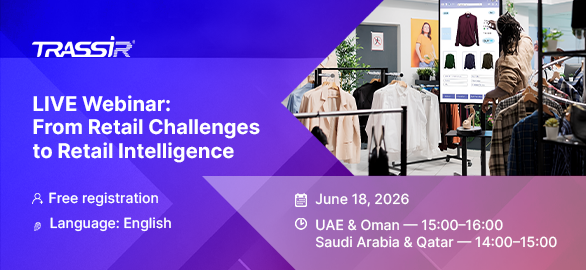
LIVE webinar: From retail challenges to retail intelligence — turning video data into actionable insights
LIVE webinar: From retail challenges to retail intelligence — turning video data into actionable insights

How AI video analytics can improve restaurant customer flow
How AI video analytics can improve restaurant customer flow
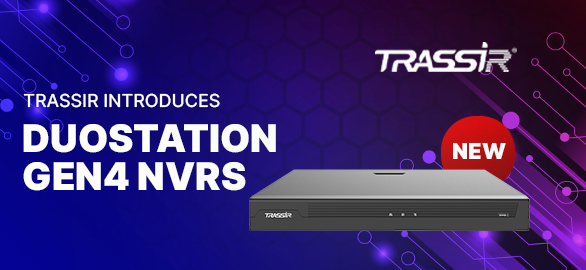
DuoStation Gen4 NVRs — scalable performance for modern video surveillance systems
DuoStation Gen4 NVRs — scalable performance for modern video surveillance systems

Centralized surveillance modernization for a premium jewellery retailer
Centralized surveillance modernization for a premium jewellery retailer

Detecting vandalism and property damage with real-time alerts
Detecting vandalism and property damage with real-time alerts

TRASSIR at Securex 2026 with neaMetrics
TRASSIR at Securex 2026 with neaMetrics
Ensuring guest safety in hotel lobbies and common areas
Ensuring guest safety in hotel lobbies and common areas
Monitoring playground and sports areas for children’s safety
Monitoring playground and sports areas for children’s safety
TRASSIR & ZNA Teknoloji at Retail Days İstanbul 2026: Powering the next era of smart retail
TRASSIR & ZNA Teknoloji at Retail Days İstanbul 2026: Powering the next era of smart retail
TRASSIR FMPA — secure your facility 24/7
TRASSIR FMPA — secure your facility 24/7
Protecting high-value industrial equipment from theft
Protecting high-value industrial equipment from theft
AI video insights for retail inventory management and loss prevention
AI video insights for retail inventory management and loss prevention
TRASSIR introduces FMPA — Face Match Passage Analysis
TRASSIR introduces FMPA — Face Match Passage Analysis
Improving visitor flow in museums and galleries with smart video analytics
Improving visitor flow in museums and galleries with smart video analytics
Why camera setup matters for license plate recognition — and how to get it right
Why camera setup matters for license plate recognition — and how to get it right
Try TRASSIR For Your Business
Learn more about how TRASSIR analytic modules work! Demo mode is an opportunity to see for yourself how the system works, and also check the interface and test all the functions.Success!
We will contact you as soon as possible